
HYGIENIC AIR HANDLING UNIT
Hygienic Air Handling Unit (AHU)
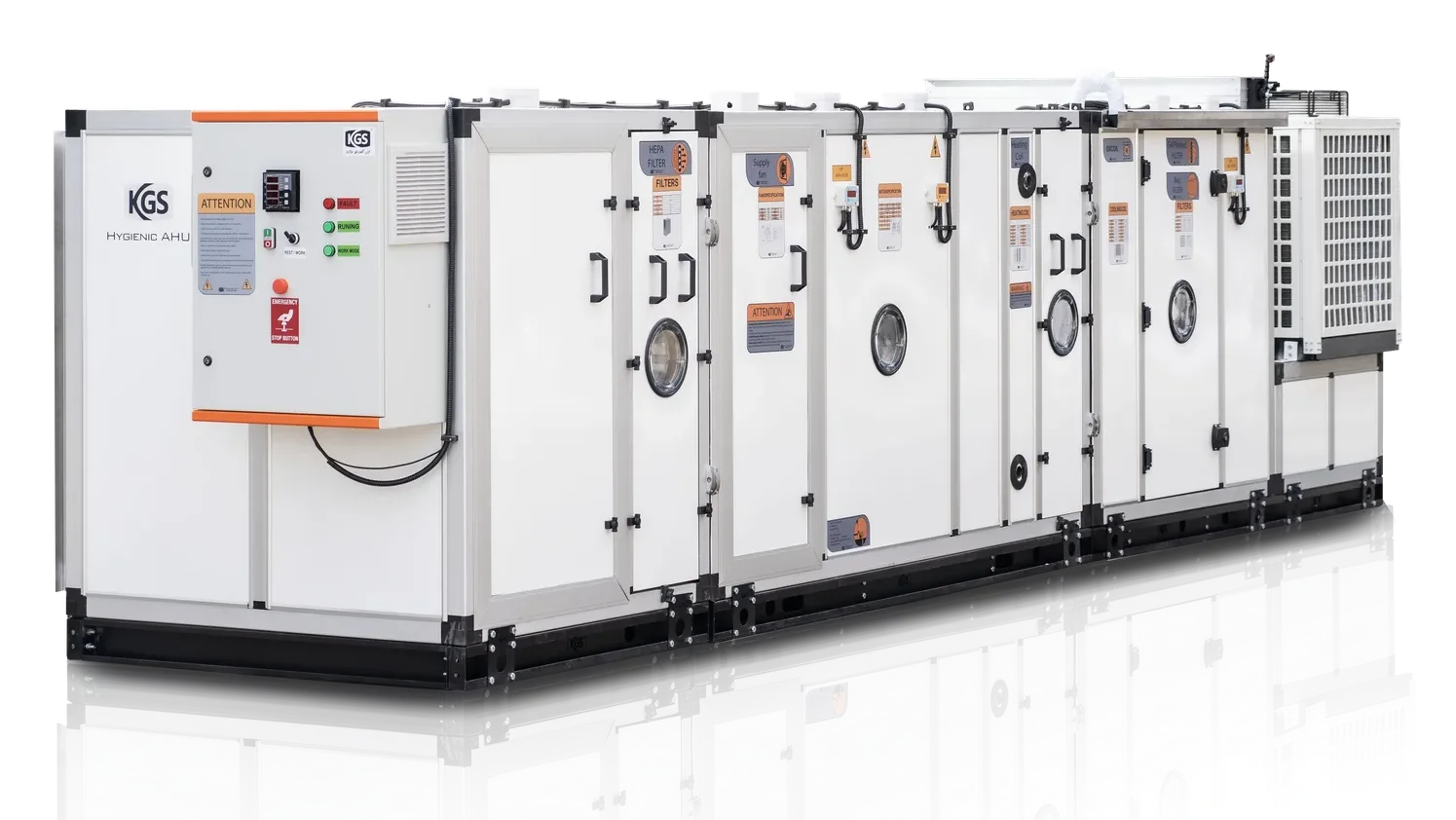
A hygienic air handling unit is an air-conditioning system designed and built to supply ultra-clean, contamination-free air to sensitive environments such as hospitals, operating theatres, laboratories, the pharmaceutical and food industries and cleanrooms.
Why a hygienic AHU?
Because these systems play a critical role in protecting human health and product quality, they matter enormously. Since the supplied air enters highly sensitive environments, the construction materials, filtration systems, profiles, fans and other components must differ significantly from those of a conventional air handling unit.
- Hospitals
- Operating theatres
- Laboratories
- Pharmaceutical industry
- Food industry
- Cleanrooms
Standards and design
Hygienic AHUs can be classified by a range of parameters. These are reviewed at the design stage and the final unit is built to the needs and requirements of the project. The two common standards for hygienic AHUs are VDI 6022 and DIN 1946-4, which define structural specifications, material quality, component design and related requirements; KGS units are built to comply with them.
The units are designed to the project URS and the relevant standards and must be able to deliver:
- Temperature
- Humidity
- Particle control
- Air volume
- Required static pressure
Technical specifications
| Air discharge | Front, side or top discharge, depending on project needs and installation location |
|---|---|
| Frame and structure | Extruded anodised aluminium profiles made for hygienic equipment |
| Inner panels | Stainless steel 304 (sheet thickness depends on unit capacity and size) |
| Outer panels | Galvanised steel with electrostatic powder coating (thickness depends on capacity and size) |
| Panel thickness | 5 cm, to reduce heat loss and minimise noise transmission |
| Insulation | Rock wool or polyethylene foam, depending on the project |
| Hygienic interior design | No 90-degree corners; curved surfaces for easier cleaning and better hygiene |
| Cooling and heating coils | Sized to air volume and thermal load; copper tube, aluminium fins, 1 to 6 rows |
| Base frame | Independent 3 mm steel-plate base; CNC cut, bent, bolted and electrostatically painted |
| Fan | Backward-curved airfoil plug fan; typically Nicotra or Comefri |
| Vibration isolation | Fan and motor assembly on spring isolators and an independent base frame |
| HMI and controls | Displays unit parameters, airflow and motor current; automatic control of the unit, dampers, motorised valves and associated equipment |
| DPT sensor | Measures the static pressure drop across the filters to indicate when to replace them |
| Dampers | Aluminium airfoil dampers for airflow control; manual or motorised |
| Wiring | In line with the standard, all electrical wiring runs outside the unit |
| Electrical panel | Free-standing or housed in a dedicated section of the unit |
| Filtration | Aluminium (AL), carbon, G4 panel, F7 and F9 bag and H13 HEPA filters, depending on the project |
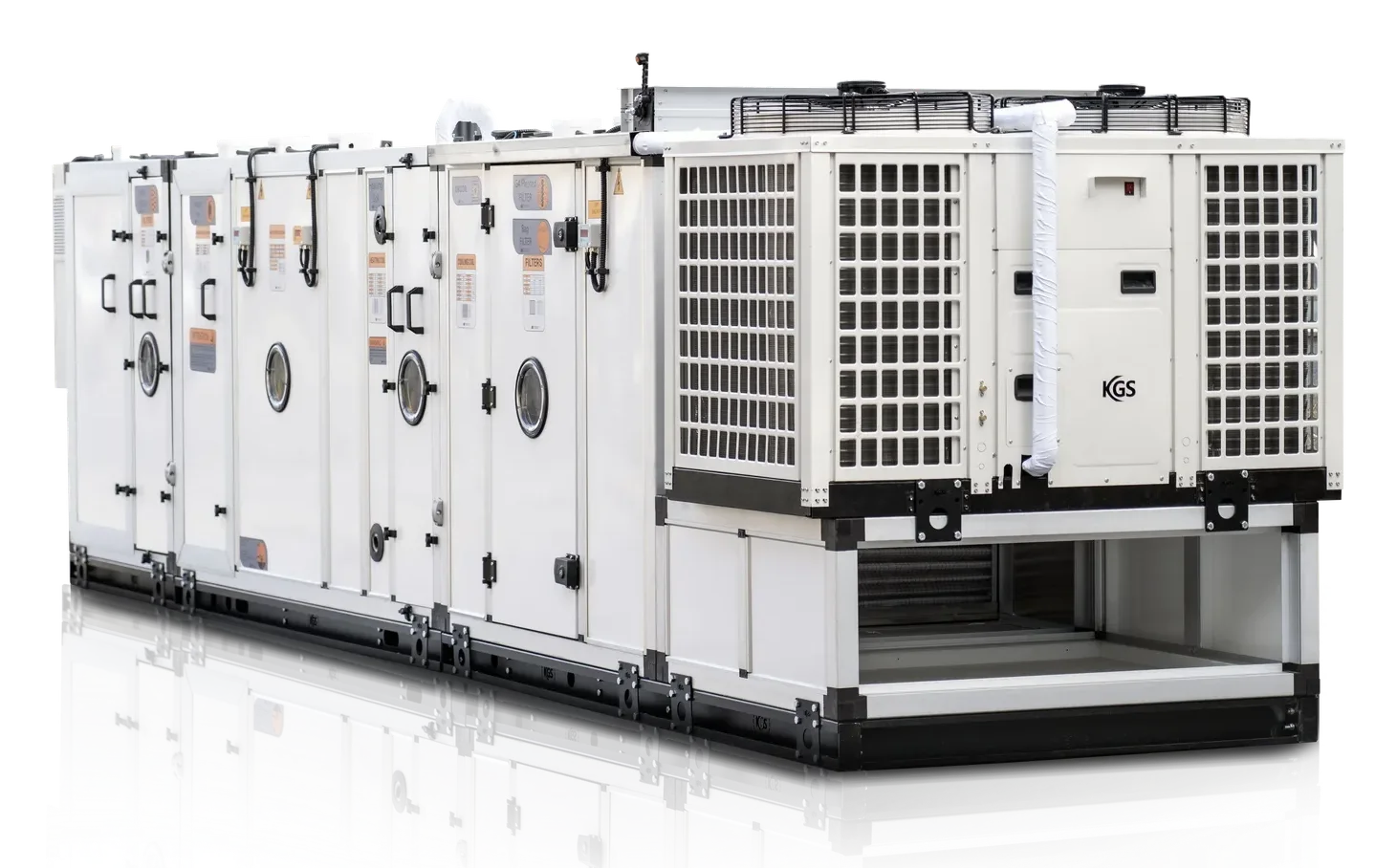
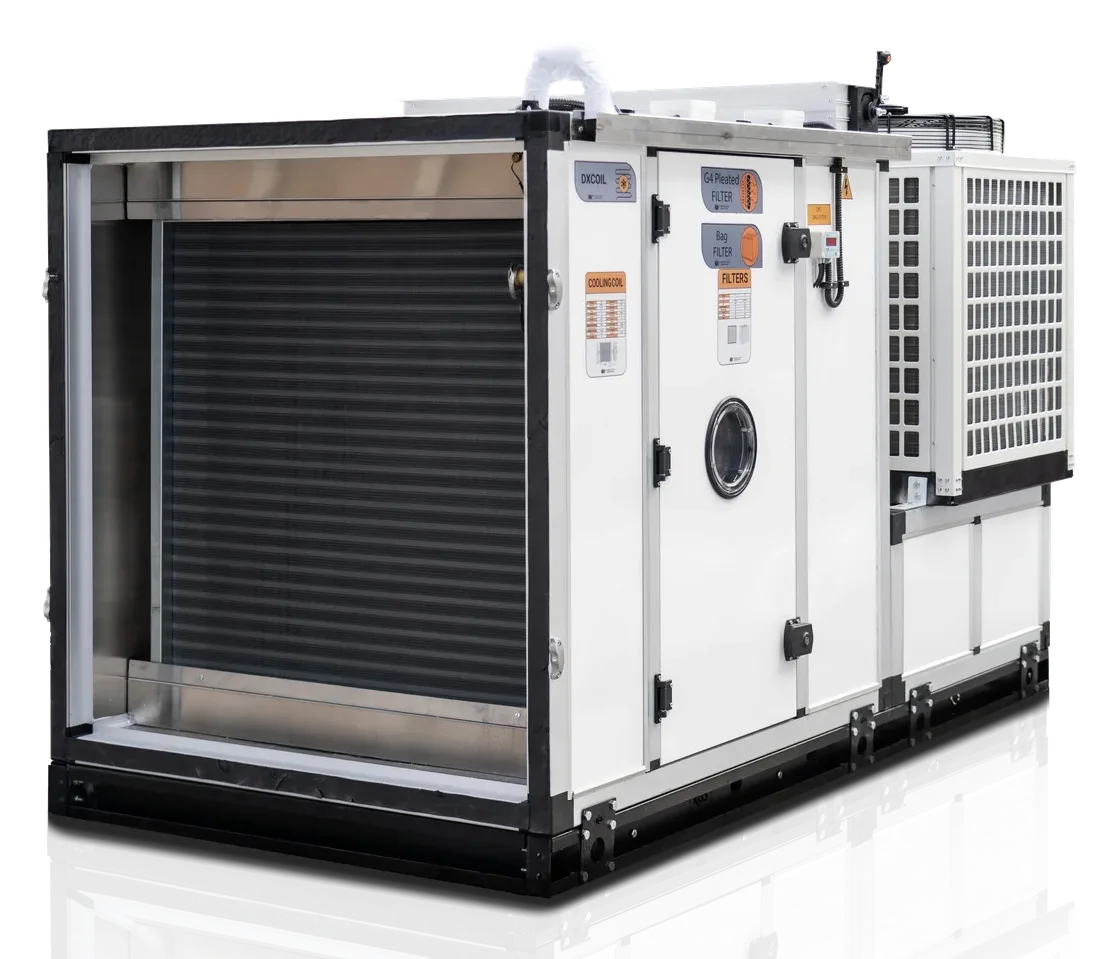
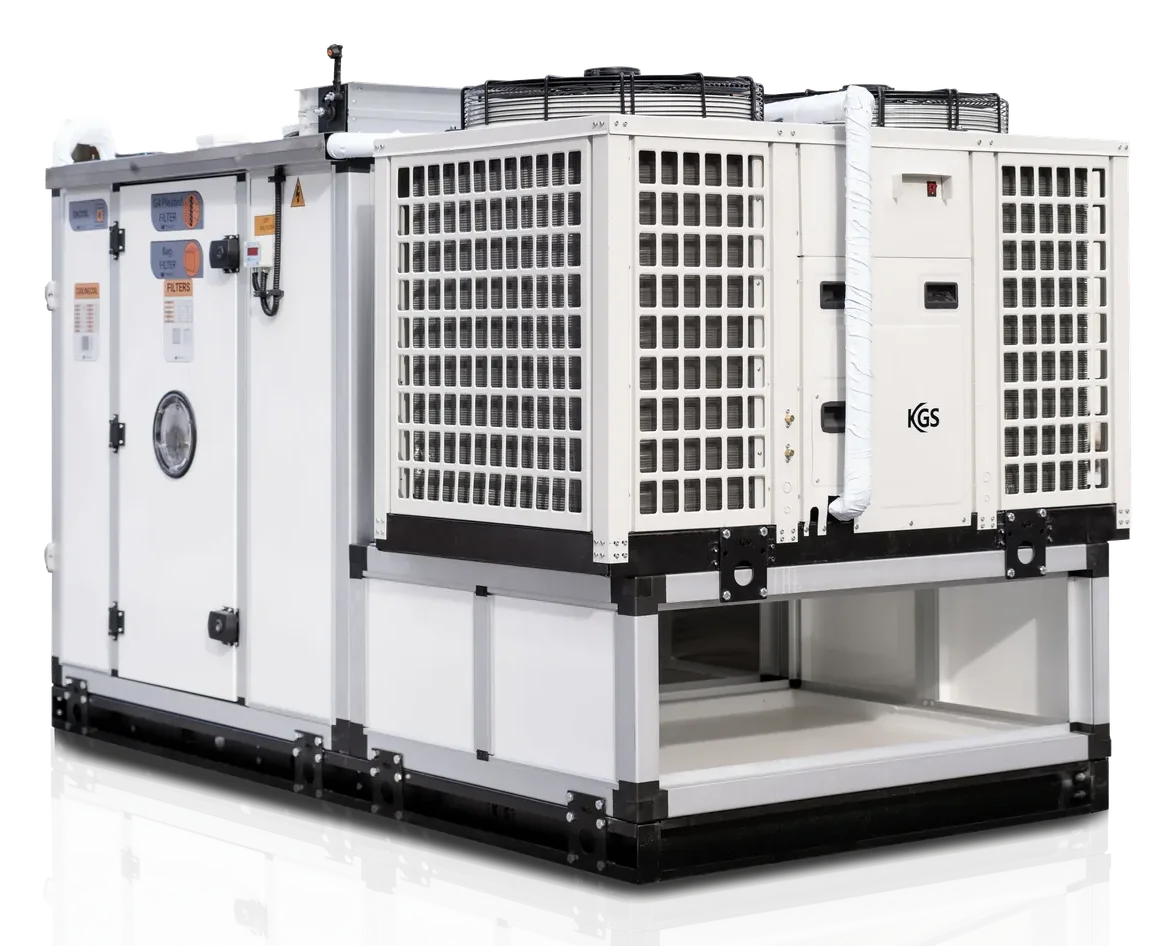
Product images
Talk to the KGS technical team about your project
Tell us your requirements, the standard you work to and the capacity you need; the KGS engineering team will walk through the proposed approach with you.